The Fastest Way to Improve Decisions is to Get Better Questions in the Room
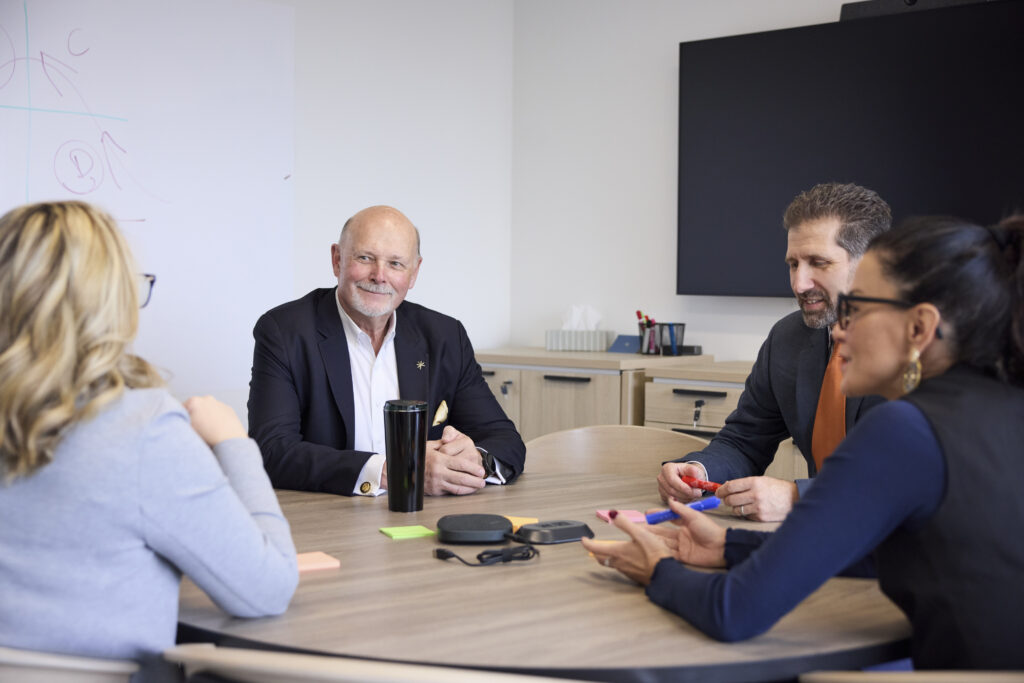
If you watch how a high-performing team makes decisions, you will notice their conversations stand out. Team members challenge assumptions early on. Someone might ask a question that changes how everyone sees the problem. The solution they reach is one that most people truly support, not just something they agree to because time is running out.
High-Performing Teams Ask Better Questions
Even strong teams can fall into a common pattern. People arrive at a meeting with a position already formed, and the discussion becomes about defending it rather than testing it. The conversation turns into a negotiation between opposing views rather than a shared effort to find the best answer. The result is usually a compromise that partially addresses every concern, but does not fully address any of them.
The research on this is worth knowing. Harvard Business Review found that when curiosity is present in a decision conversation, people think more deeply and arrive at more creative solutions. Curiosity shifts people from defending a position to engaging with the problem and working towards a solution that addresses it more fully. That is a different kind of conversation, and it produces a different quality of outcome.
McKinsey also found that companies with strong cross-functional collaboration are 1.5 times more likely to report above-average growth, and that the quality of cross-cutting decisions depends on two things: having the right people in the room and creating conditions for genuine debate. The questions you ask as a leader determine whether you get one or the other.
The Five-Question Decision Framework
These questions are not a formal process. You do not need an agenda or a workshop to utilize these. They are moves that help your team avoid locking into positions too soon. Each one opens up something the conversation might otherwise miss.
The Accountability Conversation Framework
We built this Accountability Conversation Framework to help leaders at any level have conversations that shift people from just complying to truly being accountable.
| Question | What It Does | What It Unlocks |
|---|---|---|
| What outcome are we optimizing for? | Forces clarity on success criteria before debating solutions. | Removes the assumption that everyone is solving for the same thing. |
| What are we assuming is true? | Surfaces invisible premises driving each position. | Exposes where disagreement is about underlying beliefs, not just options. |
| What would need to be true for this to work? | Shifts from debating options to designing conditions. | Opens room to solve for constraints rather than argue about them. |
| What are we not seeing? | Invites dissent without defensiveness. | Creates space for the perspective the team most needs but least expects. |
| How will we know if this is working? | Establishes shared success measures and check-in points. | Builds accountability into the decision from the start. |
These questions work in any setting: boardroom, project review, or team meeting. To see what they make possible, consider how they play out in practice.
What This Looks Like in Practice
Take a product launch discussion as an example, with two departments working to complete the launch. Marketing wants to move quickly to get ahead of an impending competitor launch. Operations needs three more weeks to protect product quality. Both teams have arrived with a date in mind, so the meeting is going in circles.
Without curiosity-led questions, someone suggests a middle date. No one is particularly confident in that date, and no one fully owns it either.
With the framework, the conversation goes in a different direction. Asking:
- “What outcome are we optimizing for?” brings up the real priority of marketing: making a strong first impression with one key account, not the launch date itself. That changes the problem.
- “What are we assuming is true?” reveals that operations was building to a full feature set, while marketing would have accepted a core release with more to follow.
- “What would need to be true for this to work?” opens a conversation about a phased approach that had not come up yet.
- “What are we not seeing?” raises a concern from someone who had been quiet: a client communication gap that could affect the launch, regardless of when it happens.
- “How will we know if this is working?” closes with a specific set of indicators the team agrees to track, and a check-in scheduled two weeks after launch.
The decision that comes out of that conversation is not just better. The people in that room built it, which means they are going to work to make it succeed. That kind of ownership does not require follow-up enforcement. It comes from the way the decision was made.
What Changes Over Time
When you use these questions consistently, your team starts to use them too. Not because you told them to, but because they have seen the value. Your cross-functional work becomes less adversarial. Your people raise problems earlier because they know it is useful, not risky.
Part of what makes this approach worth building is what it does for the people around you. When your team helps generate the path forward rather than receiving it, they develop judgment. The next time a similar decision comes up, they are more capable of navigating it. You are not just getting a better answer today. You are moving past accountability and building the capability of your team through the conversations you are already having.
When buy-in is built into how a decision gets made, execution tends to follow without the need for much pushing. Your team does not need to be sold on a direction they helped create.
The quality of your team’s decisions, over time, will reflect the quality of questions you have invited them to sit with. That is something you have real control over.
If you want external support building this kind of capability within your team, Bright Wire’s Coaching Capability Programs are built for exactly this kind of work. We would be happy to talk.